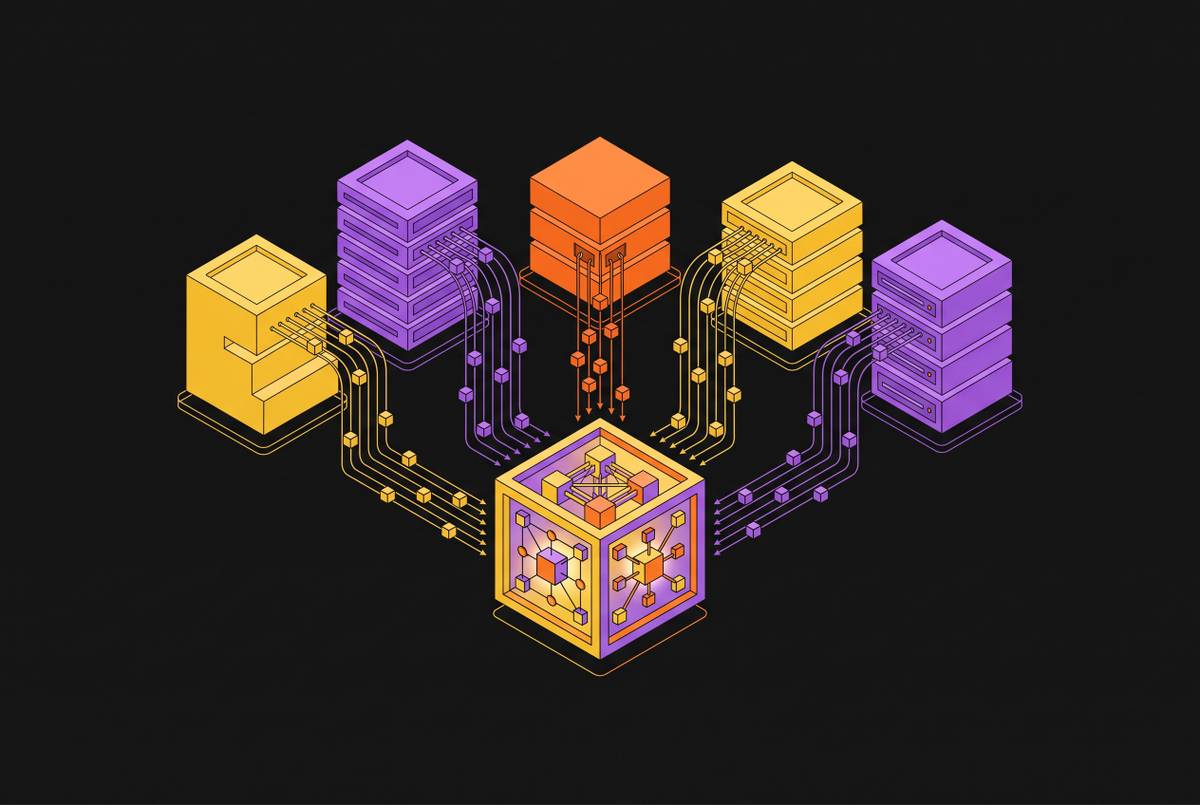
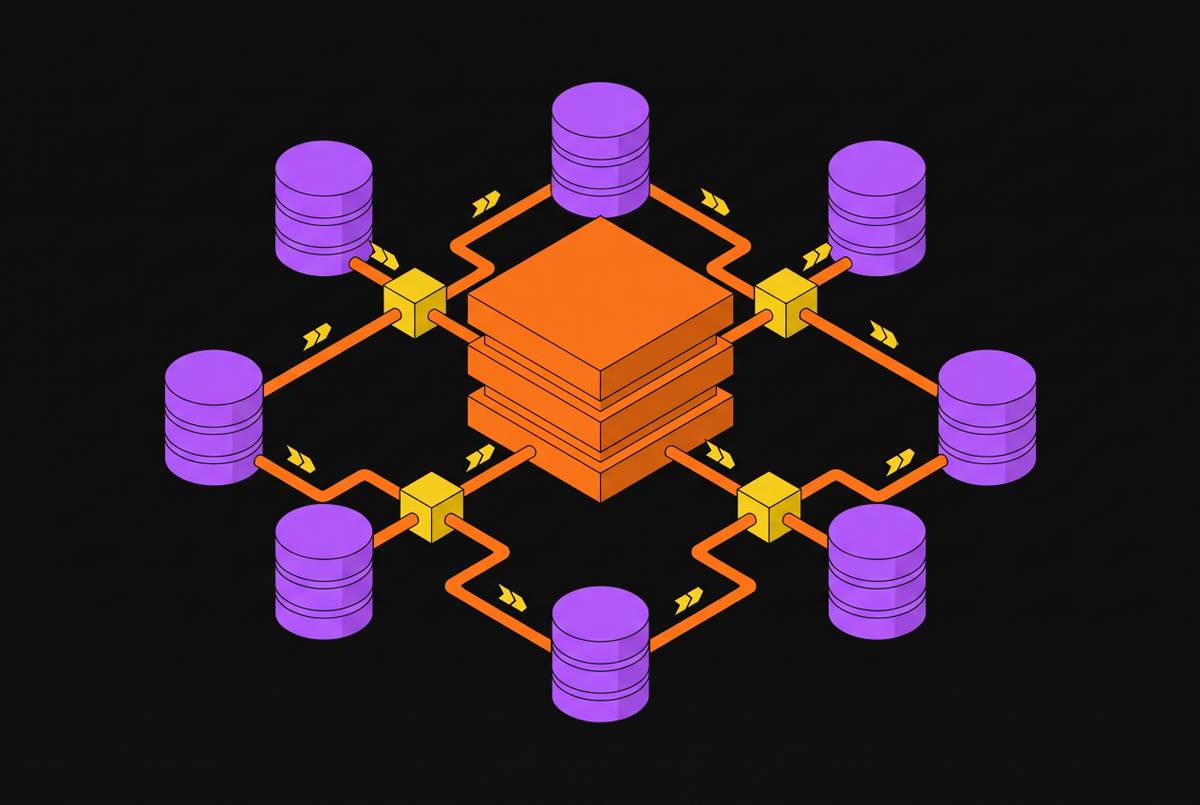
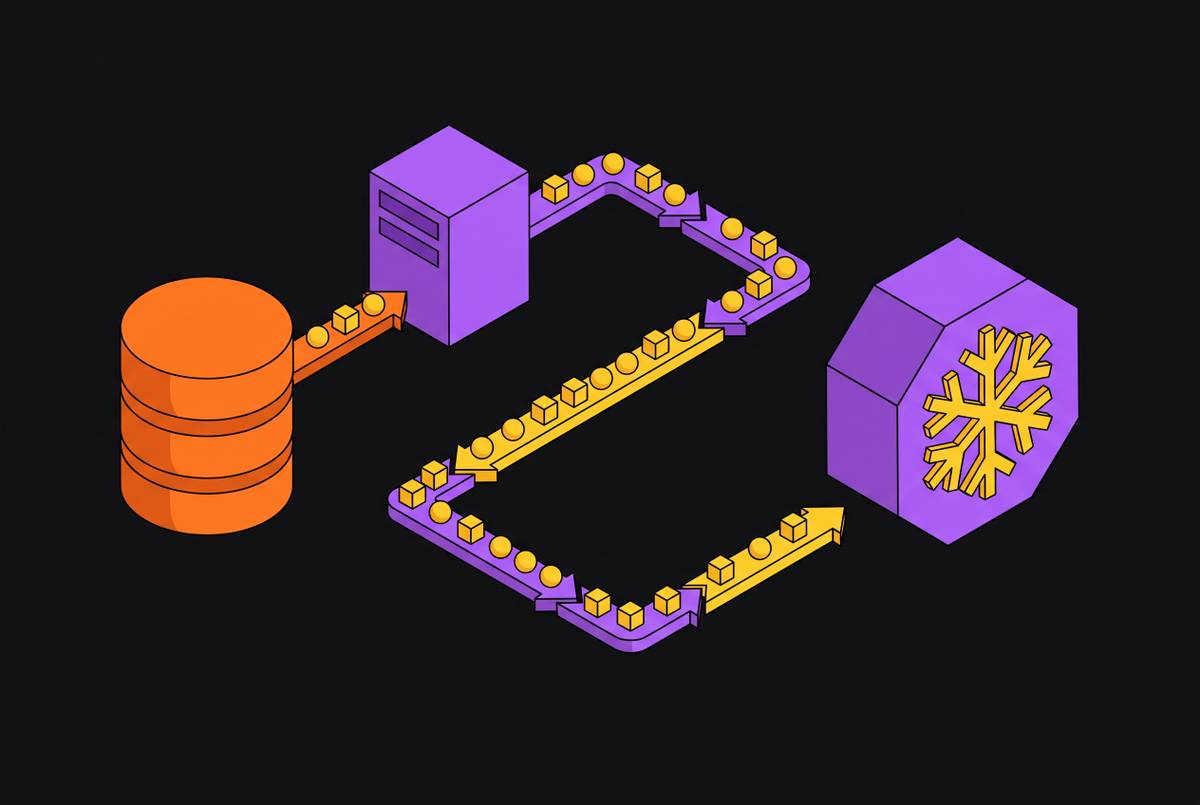
8 Best Fivetran Alternatives in 2026: Pricing, CDC and Latency Compared
Compare CDC mechanisms, latency, and operational burden to find your next replication tool.
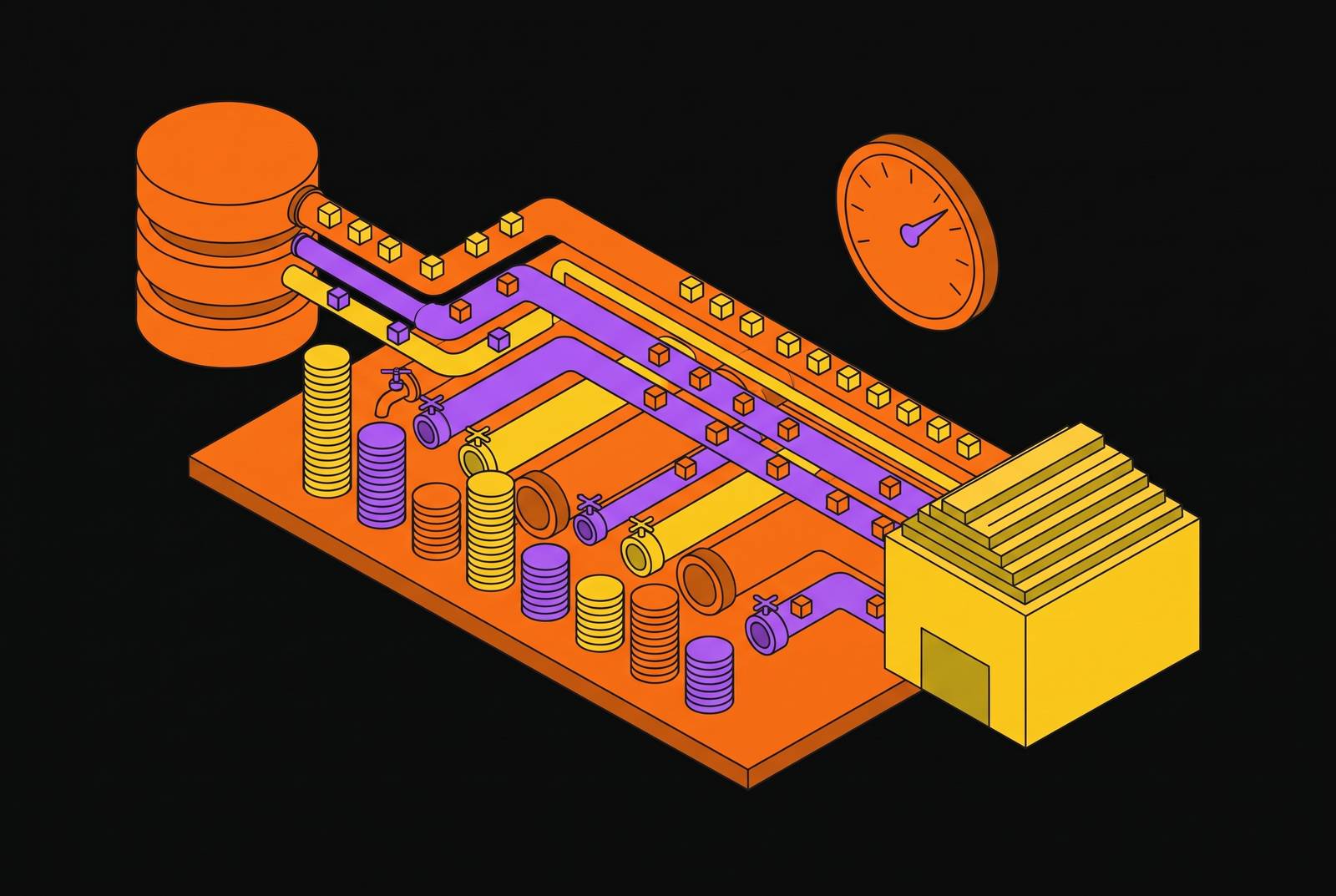
Choosing a replication alternative in 2026 means comparing how changes are captured, how quickly they arrive, and who keeps the pipeline running. Those three factors tell more than the number of connectors or the entry-level prices. The eight alternatives below include managed products and replication approaches, because the right choice depends on the downstream workload and the team’s capacity to operate it.
Why scheduled-sync ELT tools are being re-evaluated right now
Scheduled-sync ELT tools were built for human analysts who could often wait for the next refresh. When a person checks stale data, the delay can be a nuisance. When an autonomous agent acts on it, the freshness gap can produce wrong actions. Latency becomes part of operational correctness as well as a reporting preference.
That shift changes how replication tools deserve to be evaluated. Connector breadth, no-code setup, and predictable batch cadence served the previous generation of analytical workloads. They do not establish whether a pipeline can support continuous consumption. The important questions now concern the capture mechanism, the delay between a source change and its arrival, and the work required to sustain that flow.
The three dimensions that actually separate CDC alternatives
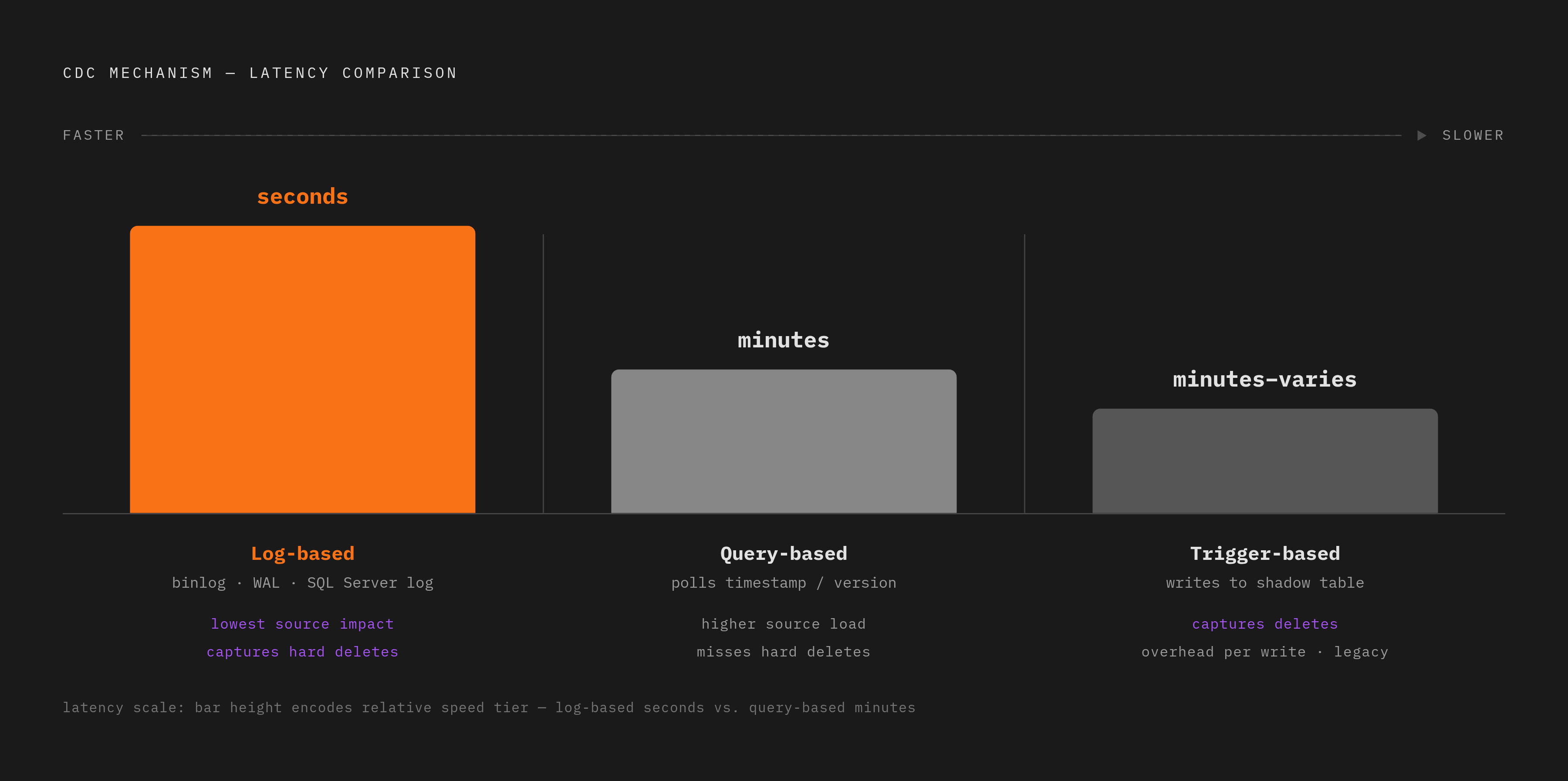
The CDC mechanism determines source load, delete visibility, and achievable freshness. Log-based CDC reads transaction logs, including the MySQL binlog, PostgreSQL WAL, and SQL Server log. It has the lowest source impact of the three approaches, captures hard deletes, and supports latency measured in seconds. Query-based capture instead polls for rows that have a newer timestamp or version column. It puts more query load on the source and misses hard deletes, but it can work when log access is unavailable.
Database triggers write each change into a shadow table, allowing deletes to be captured. Every write transaction pays the additional overhead. This approach is mostly associated with older systems, and its operational implications differ from those of a consumer reading an existing transaction log. A shared CDC label therefore does not imply equivalent behavior.
Replication latency gives those mechanisms a practical purpose. Batch ETL delivers data in hours, CDC in seconds to low minutes, and streaming materialized views can reach sub-second latency. The consumer determines which tier is necessary. The team must be able to sustain the operational burden of that tier, because self-hosted infrastructure can require Kafka provisioning, replication-slot management, schema handling, and failure recovery. Managed services absorb more of that work in exchange for less control and, in some cases, usage-based pricing.
How log-based CDC actually works inside the databases readers are likely running
PostgreSQL exposes row-level changes through logical decoding of its write-ahead log. An output plugin converts those changes into events, which reach a consumer through a replication slot. The slot is a named, crash-safe cursor. PostgreSQL retains the WAL that the slot still needs, allowing a disconnected consumer to resume from its previous position. This recovery mechanism also creates the most consequential source-side risk in the comparison.
If the consumer stops working, retained WAL can accumulate indefinitely until the disk fills, potentially crashing the database. Slot monitoring is therefore a production requirement. A low-latency demonstration says little about whether a tool protects the source during a prolonged outage. PostgreSQL also has a separate schema limitation, because logical decoding does not capture DDL. An ALTER TABLE needs a handling process outside the row-change stream.
MongoDB exposes changes through Change Streams, a high-level API built over the oplog. Consumers can subscribe to collections, databases, or the entire deployment without handling the oplog directly. The deployment model still constrains the choice. Change Streams require a replica set or sharded cluster, since a standalone instance has no oplog. DynamoDB provides item-level inserts, updates, and deletes through DynamoDB Streams, avoiding the need to poll tables.
The eight alternatives and how they score on the three lenses
AWS DMS uses log-based CDC across sources including MySQL, PostgreSQL, Oracle, SQL Server, and MongoDB, following an initial full load with ongoing capture. AWS’s CDC documentation states that DMS “does not provide real-time replication,” so it belongs in a near-real-time evaluation. Operations remain the customer’s responsibility within their AWS account. On-demand replication instances are billed hourly, while Serverless uses DCUs, with one DCU equal to 2 GB RAM. AWS launched Database Savings Plans in December 2025 with DMS included from launch, so customers could also choose commitment-based pricing. DMS fits AWS-centered teams willing to handle setup, sizing, and a cost model that needs worked examples.
The Kafka Connect ecosystem is a self-hosted way to use log-based capture to send changes into Kafka topics. On well-provisioned infrastructure, commit-to-consumer latency can be sub-second. That speed requires substantial operational work. Teams must run Kafka clusters, manage connectors and schema drift, and write consumer code, and they need a separate system for downstream stream processing. The open-source route has no software license charge, but compute, storage, infrastructure, and engineering time determine its actual cost. It suits teams with Kafka expertise that need flexibility and fan-out to many consumers.
Qlik Replicate uses log-based replication across SQL Server, Oracle, MySQL, PostgreSQL, MongoDB, mainframe, SAP, and legacy sources. Its role is broad heterogeneous replication with enterprise governance, including on-premise, cloud, and hybrid environments. No numerical latency target is supplied here. Teams therefore need to test how it performs with their source and destination before placing it in a latency tier. Pricing is quote only, and setup takes the work of an enterprise system. It fits organizations that need enough source diversity and governance to make that cost and work worthwhile.
Oracle GoldenGate provides log-based replication for Oracle-to-Oracle and heterogeneous environments. Its strongest fit is an Oracle-centric enterprise already on OCI. No numerical latency commitment is supplied here. The operational burden is high, reflecting an enterprise deployment model, and its cost model is difficult to justify outside that context.
Hevo Data offers log-based incremental capture from MySQL, PostgreSQL, SQL Server, and other databases through a fully managed SaaS platform. Hevo describes its CDC as near real-time, rather than giving a single end-to-end latency guarantee for every configuration. That distinction is important for demanding consumers. The managed SaaS category spans seconds to low minutes depending on destination and configuration, so the required route still needs scrutiny. Its no-code setup, fault-tolerant architecture, and around-the-clock support are a good fit for teams that have no dedicated data engineers. Operational burden is low because there is no infrastructure for the customer to provision or manage.
Skyvia provides no-code incremental replication, including support for SQL Server Change Tracking. That is not a blanket claim of log-based capture across sources. The Professional tier has 1-minute sync, while Enterprise has instant or faster runs. Managed operation keeps the infrastructure burden low. Plans are available at a low monthly rate billed annually, making it a candidate for teams that prioritize predictable pricing and can work within 1-minute intervals. Its mechanism and schedule should be assessed together rather than treating the CDC label as proof of continuous streaming.
BladePipe offers real-time CDC across databases, message queues, data lakes, warehouses, search engines, caching, and AI-RAG stacks. The description given here leaves out a capture mechanism that works across all sources and a figure for end-to-end latency, so teams need to check both for their workload. Its target coverage distinguishes its intended use. A visual interface supports creating and monitoring replication jobs without YAML or Java, and the platform supports data verification and correction after replication. A free Community Edition and paid plans are available. Operational burden is low to medium, with the self-hosted Community Edition requiring some operational investment.
Query-based incremental replication is the eighth alternative when access to the database log is unavailable. It polls timestamp or version columns instead of reading transaction-log events, so its latency is measured in minutes. Hard deletes remain a fundamental limitation. Repeated source queries are part of its operating cost, while the burden of running the service depends on whether it is managed or self-hosted. This approach fits access-constrained environments where the consumer accepts the delay and delete-visibility trade-off. It is an architectural alternative to continuous log-based streaming.
What schema evolution handling reveals about a tool's production-readiness
Schema evolution tests whether low latency survives ordinary database changes. This test is especially telling with PostgreSQL because its row-change stream does not include DDL. Capture alone cannot keep schemas in step. A source column addition that the tool does not handle can break the pipeline despite otherwise fast replication. The comparison therefore needs to establish how each option detects schema changes and updates its destination, rather than accepting a general claim of automatic CDC.
Producers and consumers can change independently within compatibility rules. BACKWARD compatibility means new schemas can read old data and is the safest default for most CDC pipelines when consumers are upgraded after producers. FORWARD means old schemas can read new data, supporting the reverse upgrade order. FULL supports both directions when deployment order cannot be controlled, illustrating the concrete deployment constraint these modes expose.
Managed tools that detect added or renamed columns and update destinations remove work that self-hosted implementations must otherwise address. Delete handling deserves the same close inspection. In Kafka-based pipelines, compaction removes a key when its value is null, and a sink receiving that tombstone must delete the corresponding key. Tools differ in whether they do this automatically. A pipeline that transports events quickly but mishandles schema changes or tombstones has not demonstrated production readiness.
Exactly-once delivery and failure recovery as baseline requirements, not premium features
Exactly-once delivery is a property of the whole route. Its scope must be explicit at every hop. Kafka Connect 3.3 or later can use Kafka transactions to commit source offsets and produced records atomically, but that capability requires additional configuration and is not the default. The relevant question for each option is where its guarantee begins and ends. A guarantee at capture does not, by itself, establish the behavior of every downstream stage.
With Backfill, the guarantee must cover the handoff from the initial snapshot to ongoing changes. The production-safe pattern combines snapshot-then-stream processing with a log-position-based cutover and checkpointed handoff. Otherwise, the transition exposes teams to missing or duplicated data. Recovery must both replay messages and protect the source. For PostgreSQL, that includes replication-slot health monitoring and automatic reconnection so that a lost consumer does not become an unchecked WAL-retention problem.
Teams should require these capabilities in any tool they accept. A managed service that handles reconnection, offsets, and exactly-once semantics internally removes failure-recovery work from the team. A self-hosted design leaves that responsibility with its operators. Does this tool handle the required recovery behavior automatically, or does the team have to configure and operate it?
How to match a tool to actual requirements: a decision framework
The selection process should begin with the downstream consumer’s actual latency requirement. Sub-minute needs for AI agents, real-time dashboards, or customer-facing applications call for continuous log-based CDC. Minutes allow more room for managed no-code options and short polling intervals. Hours may still justify scheduled-sync ELT. Choosing the tier first keeps teams from doing extra work to get speed the workload does not need.
The next step is to match the mechanism to the source and destination. Oracle and SQL Server estates produce a different shortlist from PostgreSQL and MySQL pipelines targeting Snowflake or BigQuery. Operational capacity then breaks the tie. AWS-centered teams can evaluate DMS, while heterogeneous enterprises have reasons to consider Qlik Replicate and Oracle-centered organizations have reasons to consider GoldenGate. Teams without dedicated infrastructure staff should favor managed operation, while Kafka-based designs require an explicit commitment to Kafka expertise.
Schema evolution and exactly-once delivery should be required at every step of that process. Teams need a clear reason to choose an option that does not handle both automatically. Compliance adds another architectural constraint. The U.S. Department of Health and Human Services issued proposed HIPAA Security Rule changes in January 2025, including stronger business-associate obligations and annual verification of technical safeguards, but the proposal has not been finalized as of 2026. SOC 2 carve-out reporting also names subservice providers without including their controls in audit scope.