Many-to-One CDC Topology Support Ranked by Operational Overhead Not Just Feature Checklists
Ranking fan-in CDC tools by engineering hours reveals what connector lists hide.
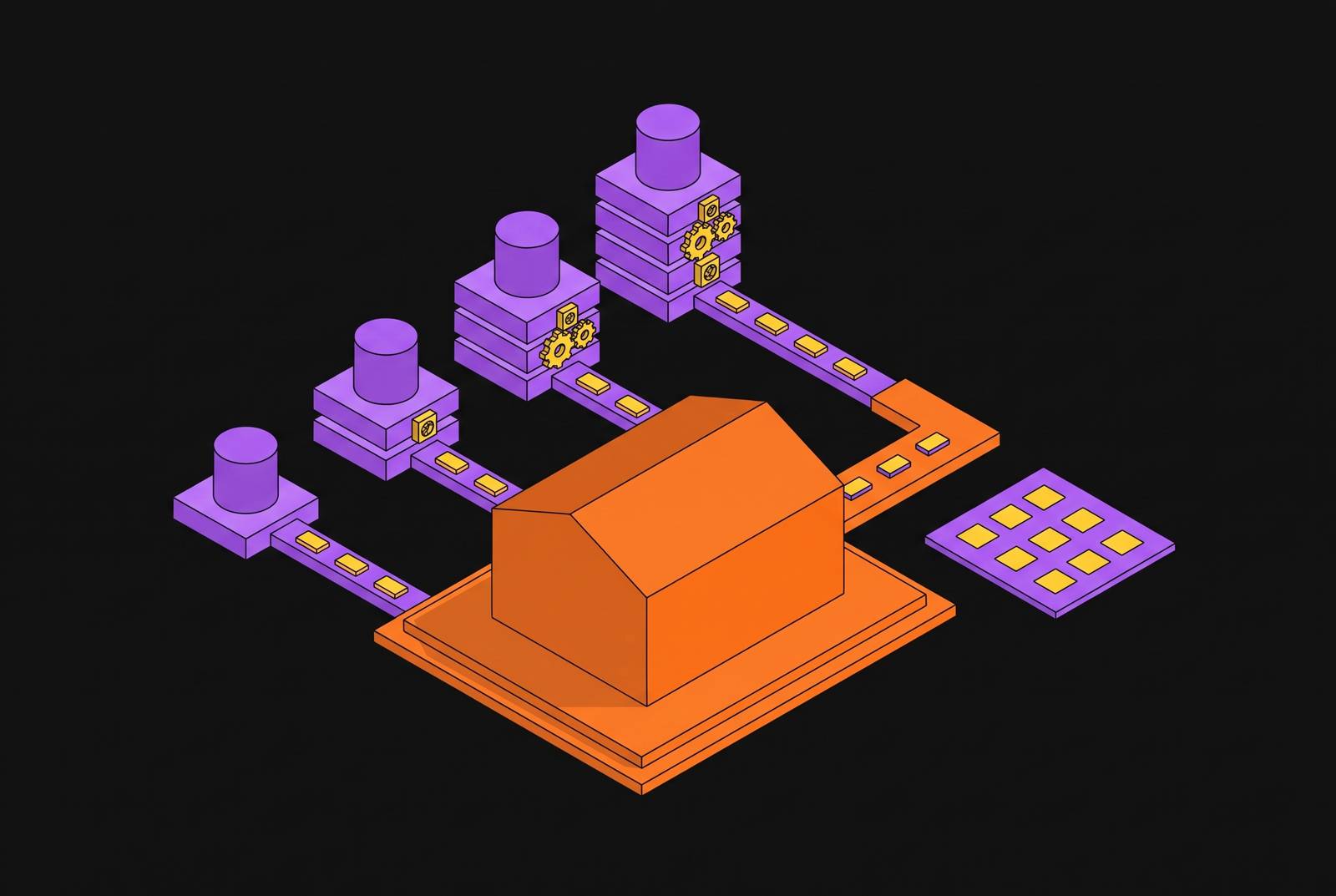
Fan-in CDC replication from multiple operational databases into a single warehouse should be ranked by operational overhead. Fully managed platforms need the least engineering work when they handle log lifecycles, schema changes, source isolation, and infrastructure on-call. Partially managed stacks leave more responsibility with the team, while self-managed open stacks offer the most control and portability at the highest engineering cost.
Why feature checklists fail as a ranking system for many-to-one CDC
A connector list establishes compatibility. “Supports Postgres, MySQL, MongoDB” says nothing about the effort required to keep those engines replicating together when a consumer stalls or a source schema changes. Two approaches can cover the same sources while assigning very different responsibilities to the customer. The useful unit of comparison is engineering hours per month, including recovery and on-call work.
That distinction becomes sharper as sources converge on one destination. A checklist treats each connector as an independent capability, but the operating team must manage their interactions through shared infrastructure and normalization logic. Coverage is only the starting point.
What makes many-to-one CDC structurally harder than single-source replication
Postgres WAL slots, MySQL binlogs, and MongoDB oplogs expose different mechanisms for tracking changes and recovering position. Each needs its own care within the same pipeline. Postgres logical replication slots, for example, keep WAL when a consumer stops committing its position, so disk pressure can grow until someone has to step in.
Tables or documents for the same logical entity can have different names, types, and nullability rules, and the processing layer must make them line up. Databases that run on their own also have no global ordering guarantee. Consequently, the pipeline must decide how to handle events arriving out of causal order across sources, beyond the ordering concerns within any one source. These are properties of fan-in itself.
How the dominant fan-in architecture distributes operational burden across the stack
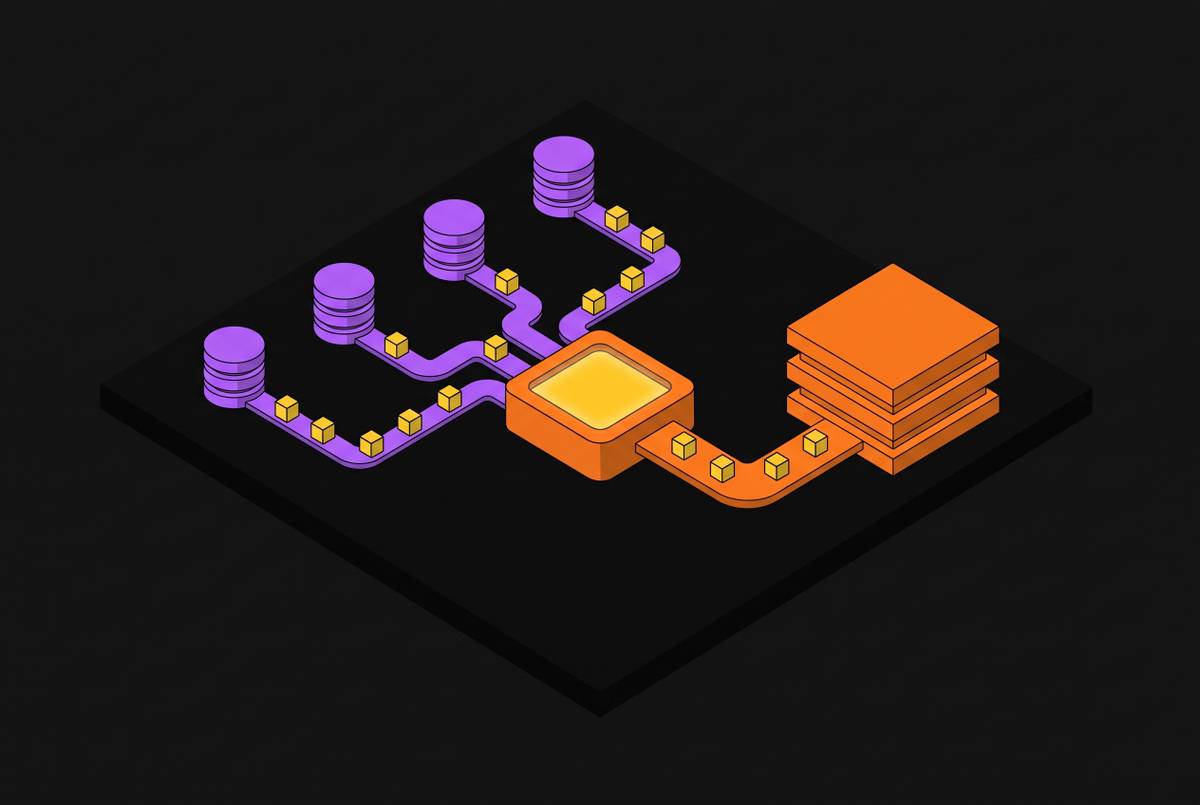
The standard architecture assigns each source connector its own Kafka topic, then uses a stream processor to normalize events and write a single output. Responsibility spans connectors, a broker, processing, and a sink. Each has its own failure domain. Flink, ksqlDB, or a custom consumer adds processing infrastructure with an upgrade cadence, scaling decisions, and recovery work separate from the source connectors.
Two CDC connectors and a nightly snapshot against one Postgres instance can create WAL slot buildup or replication slot conflicts. A managed platform that routes those patterns through a single source connection removes that kind of conflict, while a team with a self-managed design must coordinate them itself. The architecture is a sound choice for teams with streaming expertise, but the work distributed across its layers is what an overhead ranking must measure.
The ranking framework: four dimensions of operational overhead that actually differentiate tools
The first dimension is log-slot lifecycle management. A useful evaluation asks whether the platform commits Postgres WAL positions, exposes MySQL binlog lag per source, and monitors MongoDB change stream resume tokens for recovery after a restart. Aggregate latency is not enough on its own. A stalled large transaction needs to be distinguishable from a broader pipeline slowdown.
The second dimension is schema-change handling, including automatic propagation of additive changes and explicit opt-in for destructive changes such as column drops. The third is failure isolation across sources. A shared Flink job can expand an incident’s blast radius, while per-source isolation reduces its scope at an infrastructure cost. The fourth is how the work is split, especially who gets the infrastructure page and handles recovery.
How self-managed open stacks perform on each overhead dimension
With self-managed open stacks, the team is in charge of all four dimensions, even when parts of the stack automate routine work. Postgres slot management still needs operator-owned alerting and recovery procedures. A stopped consumer can retain WAL until disk pressure demands action. Additive schema changes may flow through cleanly, but destructive changes require explicit decisions about destination behavior and downstream dependencies.
Failure isolation also depends on configuration and deployment choices. In a shared Kafka Connect cluster, a stalled connector can consume worker threads and degrade other connectors. Dedicated clusters lower that risk but cost more in infrastructure, while careful configuration still takes expertise over time. The team has to do the on-call work this creates.
That ownership can be a deliberate advantage. Teams with Kafka expertise, strong platform engineering, and a need for portability across destinations can turn operational work into reusable table contracts, catalog standards, and recovery playbooks. Control is valuable when the team can sustain it. But gaining that knowledge takes engineer-quarters, and each new source engine brings lifecycle and recovery work even for a team that already has expertise.
How managed CDC platforms perform on each overhead dimension, and what distinguishes them from each other
A well-managed service maintains a single connection per source database, commits WAL positions, monitors lag, and pages its own engineers as thresholds approach. That is a substantive transfer of responsibility. Hosting infrastructure without taking ownership of connector recovery provides a narrower benefit.
Automatic additive changes and opt-in destructive changes leave less routine work for the team and keep destination tables from silently losing data. Manual schema updates at either end reintroduce customer work. Shared processing can still let a failure spread across sources even when a vendor runs it, while per-source isolation does more to contain failures and may cost more.
Price remains a separate variable. With per-GB or per-event charges, spend can become hard to predict as fan-in volume grows, so a team weighing managed services should model high-volume operation before it commits. A lower staffing burden does not automatically mean a lower usage bill.
How do five production databases feed one Snowflake warehouse without excessive overhead?
Consolidating five production databases into one Snowflake warehouse requires an ingestion choice as well as source connectors. Snowpipe is event-driven but file-based and near-real-time, with latency that may vary. Streams and Tasks use polling. The Kafka connector with Snowflake Streaming offers lower latency but adds infrastructure for the team to manage.
Google Cloud Datastream provides native CDC ingestion into BigQuery with tiered per-GiB pricing, so cost follows total fan-in volume. Apache Iceberg v3 deletion vectors reduce the penalty of applying changes compared with copy-on-write, but the benefit depends on whether the CDC writer uses them. Across destinations, a managed platform can absorb merge, upsert, and delete semantics, while a self-managed stack leaves their implementation and maintenance with the team.
Schema drift and backfill failures as the leading causes of fan-in outages in production
Schema drift can break the shared contract that makes consolidation possible. A change in one source may invalidate normalization logic used to map every source into the destination schema. The incident can therefore extend beyond the changed source. So initial replication that works says little about what the pipeline will cost to run over time.
Backfills create a similar shared-resource risk. A large table backfill using the same Kafka cluster or processing layer as live streams can cause lag across sources that are not being backfilled. Production recovery also includes snapshot-and-catch-up after outages and tombstone handling for deletes.
Destination capabilities can soften some of this work. Iceberg supports adding, renaming, widening, and dropping columns without rewriting data files, with existing files returning null for new columns and widening handled at read time. Someone still has to own source-side detection and routing. A tool that handles routine fan-in but requires manual schema repairs or backfill restarts has higher true overhead than its connector list reveals, and those failures can undermine downstream data quality.
PII exposure and compliance requirements in a many-to-one pipeline
Consolidating production databases also consolidates their sensitive fields. In regulated pipelines, in-flight masking and field-level filtering become operating requirements. The processing layer is the point for masking before data reaches the destination. Masking only after landing leaves unmasked data exposed during transit and can conflict with HIPAA or GDPR requirements, depending on data classification.
This adds a governance dimension to the operating model. When clinical or financial data is brought together, HIPAA BAA, SOC 2 Type II, private networking, and bring-your-own-cloud options can be requirements that a service must meet before it can be bought. A self-managed stack needs masking, audit logging, and compliance work on top of connector and processing operations. That work needs an explicit owner as well. A managed service reduces it only to the extent that it implements those controls end-to-end, rather than leaving the customer to configure and maintain them manually.
When batch ETL is a lower-overhead answer than many-to-one CDC
Fan-in CDC is worth the cost of running it when the workload needs sub-minute freshness, delete capture, or minimal source load. A reliable incremental load every few minutes may meet many analytics needs without the same streaming infrastructure. The distinction should precede tool selection. Otherwise, a team can optimize the cost of a topology it does not need.
Freshness is worth the cost for fraud and risk monitoring when late data affects decisions, while customer-facing analytics may need freshness as part of the product itself. AI and ML workloads also depend on the pipeline that refreshes their context, regardless of model quality. Inventory and operational visibility across microservice databases can require timely consolidation to avoid incorrect stock or routing decisions. These are concrete reasons to accept CDC overhead.
For slowly changing reference data, the trade-off is different. Batch ETL remains a lower-overhead answer where full reloads are acceptable, daily reporting is sufficient, or the team lacks the capacity to operate a fan-in stack responsibly. Streaming is not an objective in itself. For workloads that genuinely require it, the overhead framework provides the basis for deciding which architecture the team can sustain.
Applying the overhead ranking to a real adoption decision
A team choosing an approach should rank the combination of tool and architecture against its engineering capacity. Dedicated platform engineering, Kafka and stream-processing expertise, and a strong need for destination portability can justify a self-managed open stack. Its budget should explicitly include the recurring responsibilities of log management, schema evolution, isolation, and on-call coverage.
A team whose engineering capacity is better spent on its product should favor full management across all four dimensions. Managed Kafka with self-managed connectors occupies the middle position because it removes broker work but leaves connector, schema, and recovery obligations internally. For regulated data, in-flight PII controls and compliance requirements belong in that same evaluation.
For five databases feeding Snowflake, the decision must also include the selected ingestion path and its latency, infrastructure, and write-semantics burden. For another database system, Postgres, and MySQL feeding one warehouse simultaneously, source coverage establishes eligibility, while the responsibility split determines the overhead rank. Neither topology produces one universal winner. The value of this framework is that it exposes hidden costs before a team commits to an architecture it will spend engineer-years operating.